Episode 3: Where and How to Find Funding in Africa (and Beyond)
You’ve done the groundwork — refined your idea, validated your market, and built something investors…


Linkboy Academy
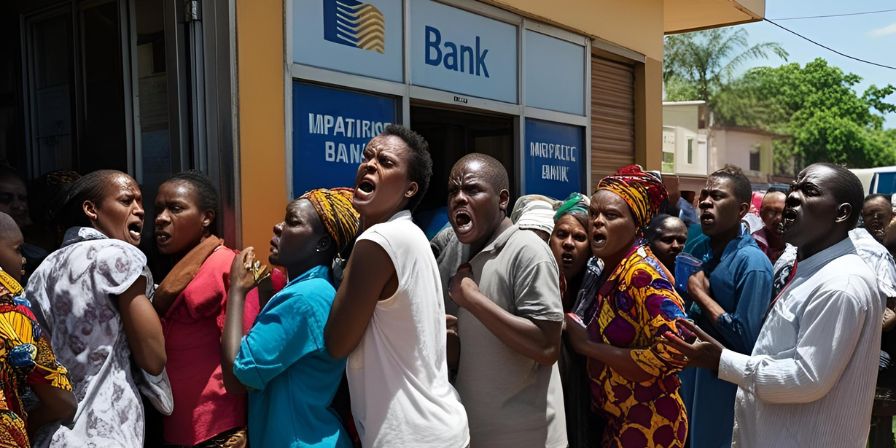
So why can’t someone in Nairobi easily pay a designer in Accra?
Africa is home to over 1.4 billion people across 54 countries, yet the continent still struggles with one of the most fragmented and underserved banking and financial systems in the world. While fintech is booming in select regions and mobile money has seen widespread adoption, the dream of a truly borderless, continent-wide payment infrastructure is far from reality.
So why can’t someone in Nairobi easily pay a designer in Accra using a simple payment link? Why does eCommerce still feel like a privileged experience for a few countries?
Here’s a deep dive into the top challenges holding back Africa’s banking evolution—and what it would take to build a system that works for everyone.

One of the biggest hurdles is currency fragmentation. Africa has over 40 different currencies, each with its own monetary policy, value, and stability.
For example:
CFA Franc is used across 14 West and Central African nations.
South African Rand (ZAR) is strong in southern economies but not accepted beyond.
Nigerian Naira (NGN) and Kenyan Shilling (KES) dominate in their zones but are volatile.
This fragmentation makes cross-border transactions incredibly complex, especially when central banks enforce tight foreign exchange controls. Without a unified digital currency or seamless currency swaps, international transactions remain slow and expensive.

Unlike developed regions with high card penetration, many African countries lack reliable financial infrastructure.
According to the World Bank, over 45% of Africans remain unbanked, with even more having limited access to online banking or credit facilities.
POS systems are still rare in rural areas, and many small businesses operate in cash.
This means digital payments are not just limited by technology—but by a lack of inclusion. The rise of mobile money (like M-Pesa in Kenya or MTN MoMo in West Africa) has helped, but these platforms don’t always integrate easily with traditional banks or across borders.

Every African country has its own financial regulatory body, and regulations rarely align across borders. From KYC (Know Your Customer) policies to transaction limits and data protection laws, businesses looking to scale continent-wide face a legal minefield.
Some central banks are even cautious about allowing foreign payment processors, limiting access to platforms like Stripe, PayPal, or Paystack in certain countries. This slows down innovation and prevents African startups from reaching the scale they need.

Many African countries still struggle with access to international payment platforms. Even where Visa or MasterCard are available, card acceptance remains limited, and many local banks impose tight restrictions on international spending.
In some regions, it’s nearly impossible to receive cross-border payments from clients outside the continent without expensive workarounds.
Until African financial systems are fully integrated with global fintech players—and each other—scaling online businesses will remain a challenge.

A growing concern is trust—or the lack thereof
A growing concern is trust—or the lack thereof. Online fraud, phishing scams, and unregulated investment platforms have made both consumers and financial institutions wary of digital transactions. Cybercrime in Africa is estimated to cost the continent over $4 billion annually, creating another layer of hesitation for digital adoption.This lack of trust extends into payment systems, with customers often choosing to pay in cash on delivery rather than share card details online.
Despite these challenges, hope is not lost. Pan-African initiatives like the African Continental Free Trade Area (AfCFTA) and fintech-driven platforms like Chipper Cash, Flutterwave, and M-Pesa Global are slowly bridging the gaps.
For Africa to realize the full potential of digital payments and online business, we need:
✅️Stronger regional cooperation and financial policy alignment
✅️Open banking frameworks and cross-border fintech integrations
✅️More inclusive access to banking and mobile finance for rural communities
✅️Investment in cybersecurity and public trust building
The future is digital, and Africa knows it. The question now is: how fast can the system evolve to match the energy and entrepreneurial spirit of its people?

You’ve done the groundwork — refined your idea, validated your market, and built something investors…

You’ve got the dream. The vision. The energy. But when it comes to funding — the real test begins. I…

The Funding Playbook for African Founders , a 3 episode Series Access to funding is consistently ran…

You’ve registered your business. You’ve chosen your name. You’ve got your why.Now what? Episode 2 of…

You’ve proven the concept.The business is real now.You’re not just testing the waters anymore — you&…

You’ve gone from idea to product. You’ve made your first sale, posted content, tested pricing, and s…