Episode 3: Where and How to Find Funding in Africa (and Beyond)
You’ve done the groundwork — refined your idea, validated your market, and built something investors…


Linkboy Academy

Africa offers an exciting canvas for building businesses that transcend borders
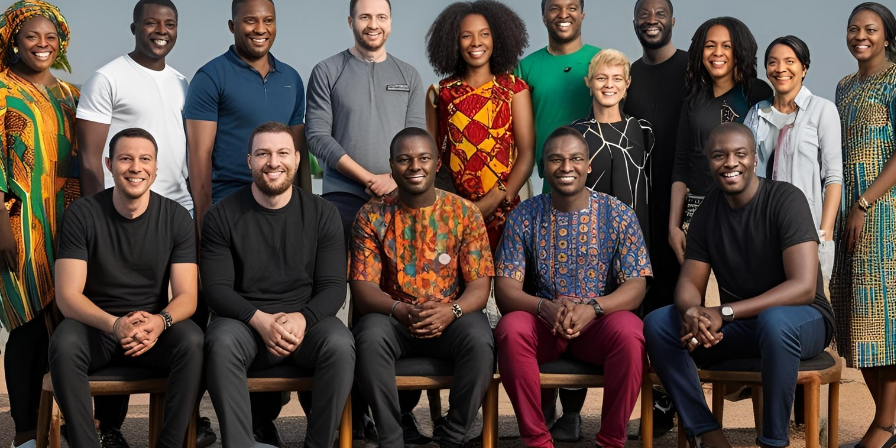
In today’s interconnected world, the notion of entrepreneurship is evolving. The opportunities and challenges that once seemed localized to specific countries are now global. For entrepreneurs in Africa, this shift brings both immense potential and responsibility. As the world’s youngest and fastest-growing continent, Africa offers an exciting canvas for building businesses that transcend borders. However, to truly harness the continent’s full potential, we must embrace a Pan-African mindset, one that focuses on building for the continent, not just a single country.

The term Pan-Africanism originated in the late 19th century as a movement to unite African countries, cultures, and people across the globe. In the context of entrepreneurship, Pan-Africanism goes beyond political unity. It advocates for collaboration and shared growth among African nations, recognizing that success in one country can positively impact others. In fact, as the African Union (AU) continues to emphasize, it is only through this united approach that Africa can achieve sustainable economic growth, social development, and regional stability.A Pan-African entrepreneurial vision requires businesses to focus not just on their immediate local market but on building scalable, cross-border solutions that can thrive in multiple African economies. This approach not only maximizes business potential but also fosters shared prosperity across the continent.

Africa’s challenges are often seen as obstacles. However, when viewed through a Pan-African lens, these challenges become opportunities for innovation and collaboration.
1. Infrastructure Gaps: While infrastructure may vary across regions, the need for reliable transportation, energy, and digital connectivity is common. Entrepreneurs who address these gaps in a way that works across multiple countries will have the advantage of tapping into broader markets while contributing to regional development.
2. Youthful Population: Africa is home to one of the youngest populations globally, with over 60% of the continent’s population under the age of 25. This demographic offers a massive market for new products and services, but also a labor force ready to drive innovation. Pan-African entrepreneurs can build platforms that not only cater to youth in one nation but can scale to meet the needs of youth across Africa.
3. Cultural and Linguistic Diversity: Africa is home to thousands of languages and cultures. While this diversity may pose challenges in terms of communication, it is also a powerful asset for businesses that can adapt their offerings to meet local needs while maintaining a broader regional appeal.
4. Access to Finance and Investment: Although the financial landscape in Africa is fragmented, various financial institutions, including venture capital and angel investors, are becoming increasingly focused on funding Pan-African startups. This shift reflects a growing understanding that investments that span multiple countries are likely to offer higher returns, given the continent’s untapped market potential.

Building a Pan-African business ecosystem also requires a supportive infrastructure. Institutions like Linkboy Academy, which focuses on technology and digital education, are essential in equipping entrepreneurs with the knowledge, skills, and tools they need to succeed in a globalized marketplace.
By offering training, mentorship, and resources, these institutions help shape the next generation of Pan-African business leaders.Governments, too, play a pivotal role in supporting Pan-African entrepreneurship. Initiatives like the African Continental Free Trade Area (AfCFTA) aim to reduce trade barriers and improve access to regional markets, creating a more favorable environment for entrepreneurs to operate across multiple countries. Governments need to prioritize policies that promote cross-border trade, improve infrastructure, and enhance access to funding for startups.

Pan-African entrepreneurship represents a tremendous opportunity for business owners to not only grow their companies but also contribute to Africa’s collective economic and social development. By thinking beyond their local borders, entrepreneurs can build businesses that cater to the needs of a continent with over 1.4 billion people.
The path to success may not always be easy, but the potential rewards are great: economic empowerment, innovation, and a shared future of prosperity for Africa.As Africa’s entrepreneurial ecosystem continues to evolve, let us commit to building businesses that are not just for one country, but for the entire continent , creating a legacy that will impact generations to come.
At Linkboy Academy, we are passionate about empowering entrepreneurs with the tools and knowledge they need to succeed. Join us in our mission to foster Pan-African entrepreneurship and build a brighter future for Africa.

You’ve done the groundwork — refined your idea, validated your market, and built something investors…

You’ve got the dream. The vision. The energy. But when it comes to funding — the real test begins. I…

The Funding Playbook for African Founders , a 3 episode Series Access to funding is consistently ran…

You’ve registered your business. You’ve chosen your name. You’ve got your why.Now what? Episode 2 of…

You’ve proven the concept.The business is real now.You’re not just testing the waters anymore — you&…

You’ve gone from idea to product. You’ve made your first sale, posted content, tested pricing, and s…
You’ve done the groundwork — refined your idea, validated your market, and built something investors…
You’ve got the dream. The vision. The energy. But when it comes to funding — the real test begins. I…
The Funding Playbook for African Founders , a 3 episode Series Access to funding is consistently ran…
You’ve registered your business. You’ve chosen your name. You’ve got your why.Now what? Episode 2 of…
You’ve proven the concept.The business is real now.You’re not just testing the waters anymore — you&…
You’ve gone from idea to product. You’ve made your first sale, posted content, tested pricing, and s…